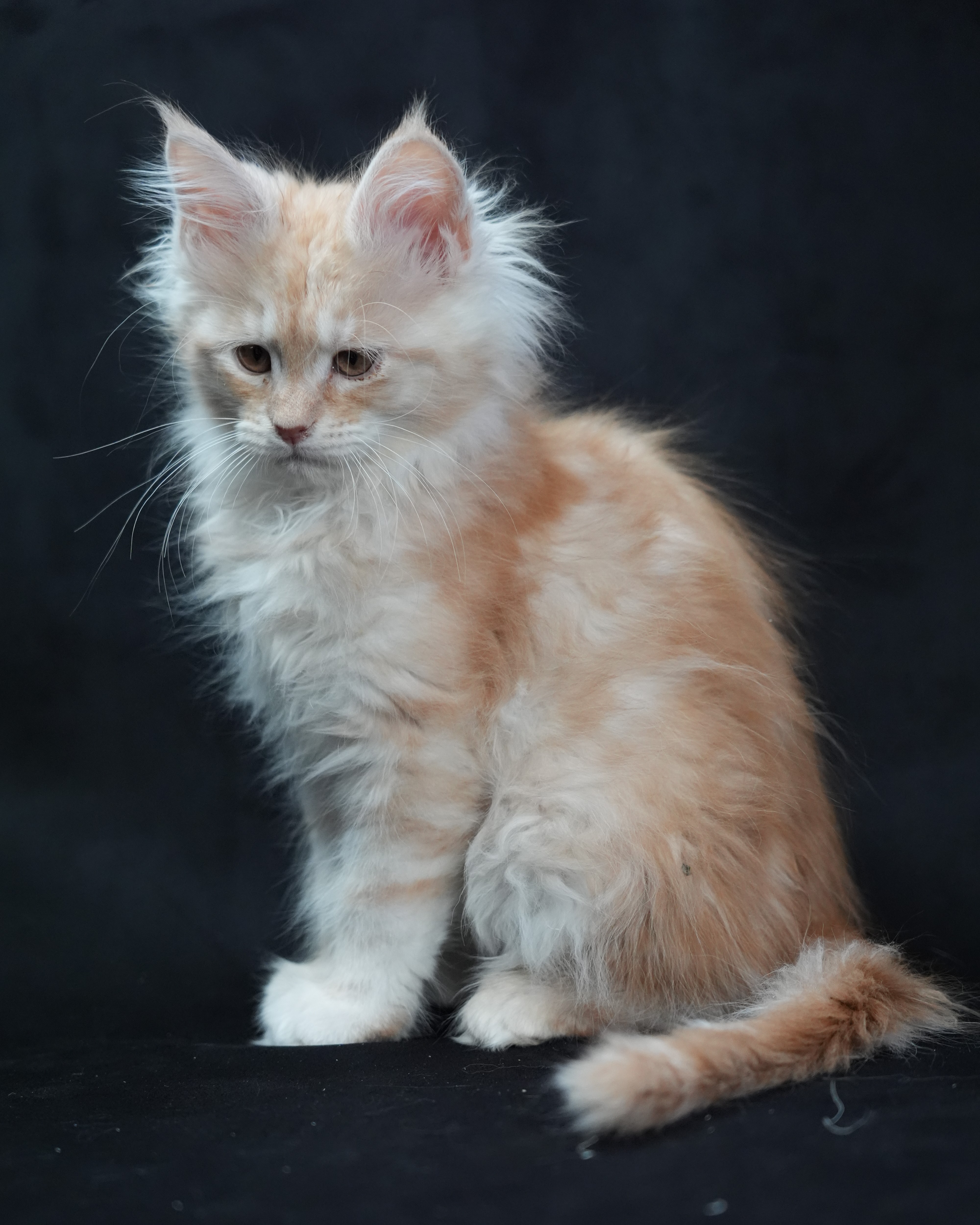
You have a pickup date. Now what do you actually need? This is the no-fluff shopping list for a Maine Coon kitten — what to buy, what to skip, and what to splurge on. Maine Coons are not average-sized cats, and some standard cat products simply do not work for them.
01The Litter Box: Bigger Than You Think
This is the single most important purchase and the one most new owners get wrong. Standard litter boxes are too small for a Maine Coon — even as a kitten, they grow fast.
- Minimum size: 24 inches long. For an adult Maine Coon, 30+ inches is ideal. The rule of thumb is 1.5x the length of your cat.
- High-sided boxes are better than low-sided — Maine Coons are enthusiastic diggers and will scatter litter everywhere with a shallow box.
- Covered boxes work for some cats but can trap odors and feel cramped for a large breed. If you use one, make sure the opening is large enough.
- Buy two boxes minimum. The rule is one per cat plus one extra.
- Unscented clumping litter is the standard recommendation. Avoid scented litters — cats have sensitive noses and many will refuse a scented box.
02Food and Water Setup
Maine Coons need high-quality protein and adequate hydration. The equipment matters as much as the food.
- Stainless steel or ceramic bowls — not plastic. Plastic harbors bacteria and can cause feline acne on the chin.
- A water fountain is strongly recommended. Maine Coons have a naturally low thirst drive and running water encourages drinking, which is critical for kidney and urinary health.
- Wide, shallow food bowls — Maine Coons have long whiskers and deep narrow bowls cause whisker fatigue, which can make them reluctant to eat.
- We will send you home with a supply of the food your kitten has been eating. Transition slowly over 7–10 days to avoid digestive upset.
- Have wet food on hand from day one. Maine Coons should eat wet food as a significant portion of their diet.
03Grooming Tools
You will need these from week one. Starting grooming early makes it a positive routine rather than a battle.
- Wide-toothed metal comb — your most important tool. Reaches the undercoat where mats form.
- Slicker brush — for smoothing the outer coat after combing.
- Nail clippers designed for cats — not human nail clippers. Start trimming nails within the first week.
- Cat-safe ear cleaning solution and cotton balls.
- A grooming glove as a backup for cats who resist brushes.
- Skip the cheap plastic combs — they do not reach the undercoat and give you a false sense of progress.
04Cat Tree and Scratching
This is not optional. Maine Coons need vertical space and appropriate scratching surfaces. Without them, your furniture becomes the cat tree.
- A tall, sturdy cat tree — minimum 5 feet, ideally 6+ feet. Maine Coons are large and need a tree that can support their weight without wobbling.
- Make sure the platforms are wide enough for a large cat to stretch out on. Many budget trees have tiny platforms.
- At least two scratching posts: one vertical (tall enough for a full stretch) and one horizontal or angled.
- Sisal rope scratching surfaces are preferred over carpet — they satisfy the scratching instinct better and last longer.
- Place the cat tree near a window. A Maine Coon with a window view is a happy Maine Coon.
05Toys and Enrichment
Maine Coons are intelligent, playful cats. They need mental stimulation as much as physical exercise.
- Wand toys with feathers or ribbons — for interactive play sessions. Plan for 20–30 minutes of active play daily.
- Puzzle feeders — start simple and increase difficulty as your kitten gets older. These are excellent for mental stimulation.
- Crinkle balls, small stuffed mice, and lightweight balls for solo play.
- A tunnel or paper bag (handles removed) for hiding and ambushing.
- Avoid toys with small parts that can be chewed off and swallowed — strings, googly eyes, small bells.
06The Carrier
You need a carrier for pickup day and every vet visit after. Buy the right one now.
- Hard-sided carriers are safer in a car than soft-sided ones.
- Buy for adult size, not kitten size. A Maine Coon male can reach 18+ pounds — get a carrier rated for at least 20 pounds.
- Top-loading carriers are much easier for vet visits — the cat can be examined without being pulled out of the front.
- Leave the carrier out in your home with a blanket inside so your kitten associates it with comfort, not just vet trips.
07What You Do Not Need
Save your money on these.
- Kitten-specific food — Maine Coons grow slowly and do not need the high-calorie kitten formulas designed for rapid-growth breeds. Ask us what we recommend.
- Automatic self-cleaning litter boxes for a new kitten — they can startle young cats and cause litter box aversion.
- Elaborate cat costumes and accessories — your Maine Coon will tolerate exactly zero of these.
- Catnip for kittens under 6 months — most kittens do not respond to catnip until they are older.
Further Reading
Interested in bringing home an Empire Maine Coon?