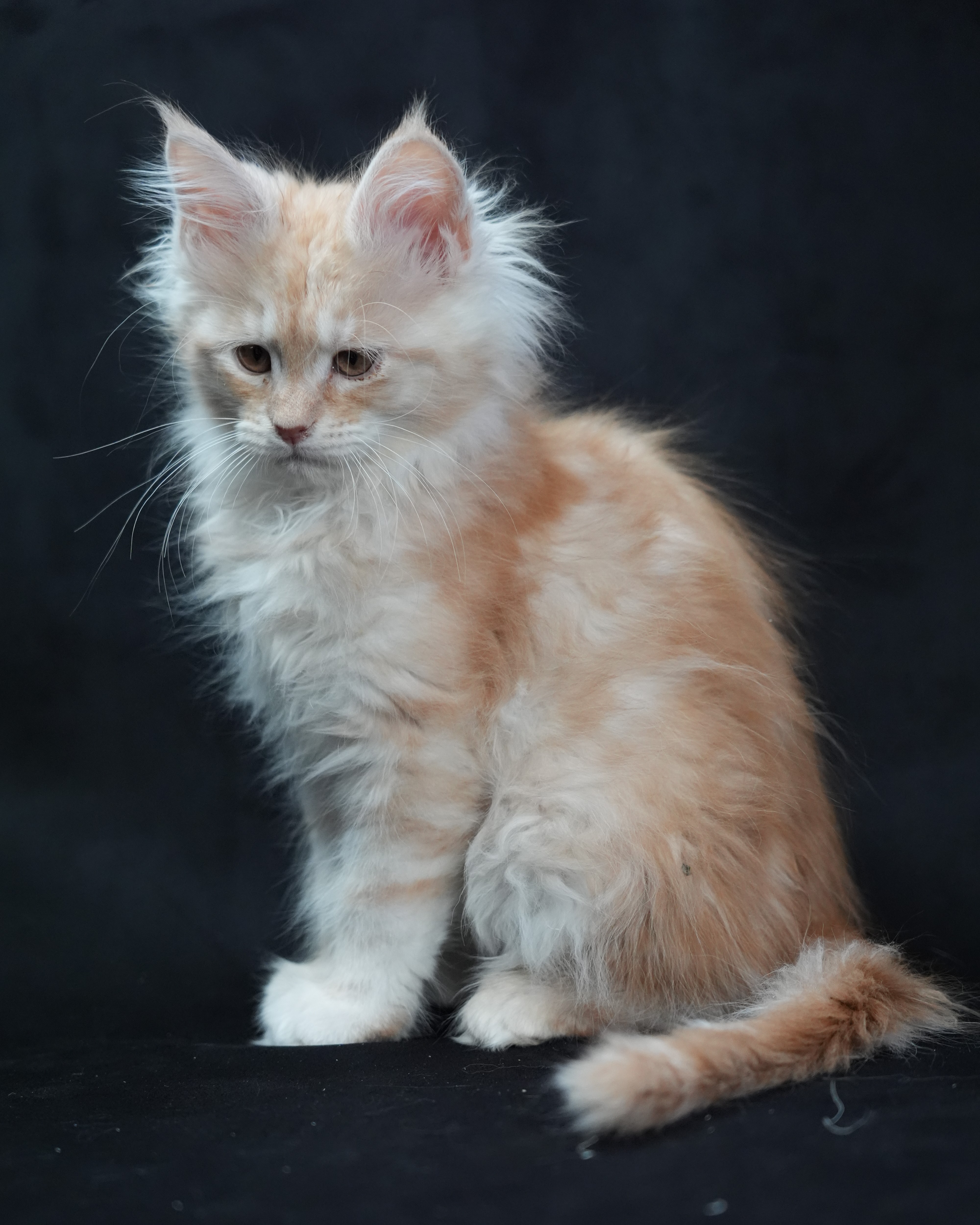
The first six months with a Maine Coon kitten are a whirlwind. They grow fast, change constantly, and will test your patience and your furniture in equal measure. Here is a month-by-month guide to what is normal, what to watch for, and what milestones to celebrate.
01Month 1 at Home (Weeks 1–4): The Adjustment Period
Your kitten just left everything familiar — their mother, their littermates, the only home they have known. The first month is about building trust and establishing routine, not about showing off to guests.
- The 10-day quarantine is not optional. Keep your kitten in the safe room, away from other pets and high-traffic areas, while they decompress.
- Expect some hiding. A kitten who spends the first few days under the bed is not broken — they are processing. Give them space and let them come to you.
- Appetite may be reduced for the first 24–48 hours. If they are not eating at all by day 3, call your vet.
- Loose stools for the first few days are common due to stress and diet transition. Persistent diarrhea beyond 5 days warrants a vet call.
- Your mandatory vet visit must happen within 72 hours of pickup per the purchase agreement. Do not skip this.
- Start handling paws, ears, and mouth from day one — even briefly. This builds tolerance for grooming and vet exams.
02Month 2 (Weeks 5–8): Personality Emerges
By week five or six, most kittens have settled in enough to start showing their real personality. This is when it gets genuinely fun.
- Play drive kicks in hard. Interactive wand toy sessions become essential — 20–30 minutes daily minimum.
- Zoomies are normal and hilarious. A kitten sprinting at full speed for no apparent reason at 2am is a feature, not a bug.
- Socialization window is still open. Introduce new people, sounds, and experiences gently and positively.
- If you have other pets, this is typically when careful introductions can begin — slowly, with scent swapping before visual contact.
- Litter box habits should be fully established by now. Any regression (going outside the box) warrants investigation.
- First grooming sessions should be happening regularly. Keep them short and positive.
03Month 3 (Weeks 9–12): The Confident Explorer
Three months in, your kitten is confident, fast, and has identified every surface in your home as a potential launch pad.
- Vertical exploration begins in earnest. If you have not installed the cat tree yet, do it now.
- Scratching behavior intensifies. Make sure scratching posts are available and positioned near furniture they are targeting.
- Appetite increases significantly as growth accelerates. Maine Coons grow slowly but steadily — do not restrict food at this stage.
- Socialization with children and dogs should be well underway if applicable. Maine Coons are generally excellent with both.
- Nail trimming should be a regular routine by now — every 2–3 weeks.
04Months 4–5: The Teenager Phase
Maine Coon kittens hit a phase around 4–5 months that can only be described as the teenager phase. They are bigger, faster, more confident, and significantly more opinionated.
- Energy levels peak. This is the most demanding period for interactive play — they need it and will make your life difficult if they do not get it.
- Testing boundaries is normal. A kitten who suddenly starts jumping on counters or knocking things off shelves is not being malicious — they are exploring.
- Redirect, do not punish. Consistent redirection to appropriate surfaces and toys is far more effective than any form of punishment.
- Spay or neuter is typically scheduled around 5–6 months. Discuss timing with your vet.
- Coat development accelerates. The mane and ear tufts start becoming more pronounced. Grooming frequency should increase.
05Month 6: The Halfway Point
At six months, your Maine Coon is still a kitten — but a substantial one. Males may already be 8–10 pounds. Females 6–8 pounds. They will not reach full size until 3–5 years old.
- Personality is largely set by now. The cat you have at 6 months is a preview of the adult cat you will have.
- Routine is your best friend. Maine Coons thrive on predictable feeding times, play sessions, and grooming schedules.
- HCM baseline screening can be discussed with your vet around this age — ask for a referral to a veterinary cardiologist.
- If you have not already, this is a good time to evaluate pet insurance options if you have not enrolled.
- Celebrate. Six months in, you have done the hard part. The kitten who hid under the bed on day one is now your shadow.
06When to Call the Vet
Most kitten behavior is normal. But some things warrant a call.
- Not eating for more than 24 hours.
- Diarrhea lasting more than 3–5 days, or blood in stool.
- Vomiting more than once or twice in a 24-hour period.
- Lethargy that is unusual for your kitten — not just a nap, but genuine unresponsiveness.
- Sneezing or eye discharge that persists beyond a few days.
- Any difficulty breathing, open-mouth breathing, or blue-tinged gums — this is an emergency.
- Limping, reluctance to jump, or any sign of pain.
Further Reading
Interested in bringing home an Empire Maine Coon?